
Deed of sale: the contract that starts every transfer

A Gqeberha couple agreed on a price and watched the agent slide a thick document across the table but few people read past page one. Both parties signed. Everyone shook hands, and the agent said the attorneys would take it from there. What was on those pages wasn't a formality or a summary of the conversation they'd had. It was the legal contract determining whether a transfer could proceed at all, and every obligation it created would follow the buyer and the seller all the way to the Deeds Office.
What is a deed of sale?
A deed of sale is the written, signed agreement between a buyer and a seller recording the terms on which ownership of a property is to be transferred. South African law requires it to be in writing and signed by both parties before any conveyancer can begin the transfer. Without a valid deed of sale, there is no sale to register, and no transfer can be lodged at the Deeds Office. Your conveyancer relies on this document for every step of the process.
Key Takeaways
- A deed of sale must be in writing and signed by both the buyer and the seller. A verbal agreement to buy or sell a property has no legal force in South Africa.
- The Alienation of Land Act 68 of 1981 sets the minimum requirements a deed of sale must meet. Anything missing from those requirements may invalidate the agreement.
- Every suspensive condition, whether it concerns a bond approval, a subject-to-sale clause, or a specific date, is written into the deed of sale and governs whether the sale comes into effect at all.
- The deed of sale is not the transfer deed. It authorises the transfer to begin. The actual transfer is a separate document prepared by the conveyancer and registered at the Deeds Office.
- Voetstoots clauses, occupation clauses, and special conditions agreed between the parties are only enforceable if they appear in the signed deed of sale.
The Alienation of Land Act and what it requires
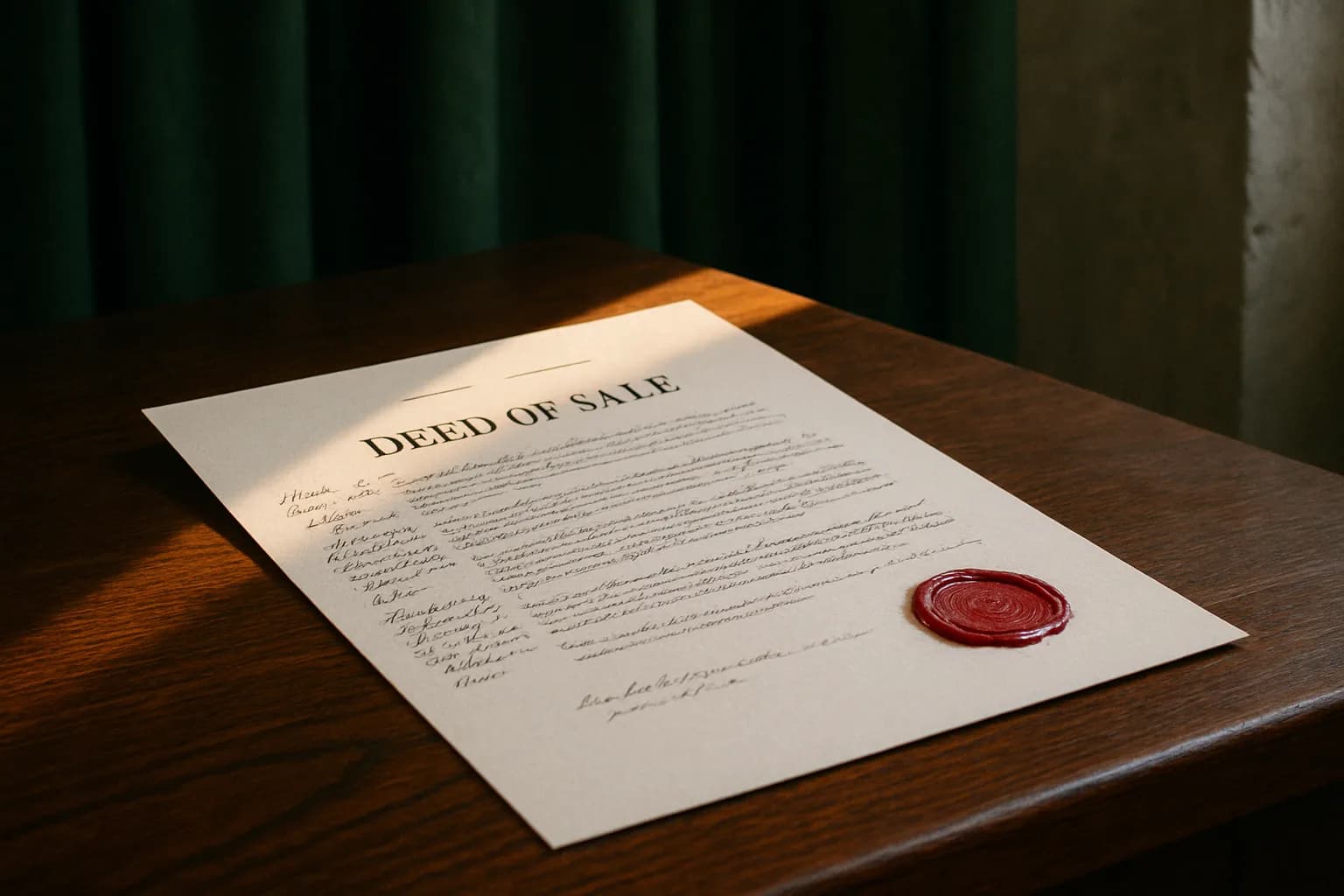
South African law doesn't leave the validity of a property agreement to chance or goodwill. The Alienation of Land Act 68 of 1981 is the statute governing every sale of land in South Africa, and it sets out minimum requirements the deed of sale must meet before the law recognises it as binding.
The Act requires the agreement to be in writing. It requires both the buyer and the seller to sign it. It also requires the document to record the purchase price and describe the property being sold. If any of these elements are missing, the agreement isn't merely incomplete; it may be void, meaning the law treats it as if it never existed. A buyer who has already paid a deposit, or a seller who has already turned away other offers, has no enforceable contract to rely on if those requirements aren't met.
The Act further places restrictions on instalment sale agreements and requires specific disclosures from the seller in certain circumstances. Conveyancers work within these requirements on every residential and commercial sale.
The difference between a deed of sale and an offer to purchase
In South African property practice, the deed of sale and the offer to purchase are the same document in most residential transactions. The offer to purchase is the document the buyer signs first, presenting the terms they're prepared to accept. When the seller signs it without amendment, it becomes a binding deed of sale. When the seller counters, the negotiation continues until one party accepts the other's terms in writing, and that signed acceptance creates the deed of sale.
The distinction is worth understanding, because it tells you when you have a binding contract and when you don't. A buyer's signed offer not yet accepted by the seller is an offer and nothing more. The seller is free to accept another offer in the meantime. Once the seller signs the same document on the same terms, the deed of sale exists, and both parties are legally bound to it. An estate agent who describes an offer as "accepted" without signatures is describing something with no legal standing. The contract exists when the signatures are in place, not before.
What the deed of sale must contain
Every deed of sale in a South African property transaction needs to capture certain details clearly. The Alienation of Land Act's minimum requirements cover the parties, the property, and the price, but a properly drafted agreement goes further.
Key contents of a standard deed of sale
| Element | What it records |
|---|---|
| Parties | Full names and identity numbers of buyer and seller |
| Property description | Erf number, township, extent, and physical address |
| Purchase price | Agreed amount and how it will be paid |
| Deposit | Amount, deadline, and where it is held |
| Suspensive conditions | Bond approval clause, subject-to-sale clause, dates |
| Occupation date | When the buyer may take physical possession |
| Occupational interest | Rental payable if occupation precedes registration |
| Voetstoots clause | Whether the property is sold as-is |
| Special conditions | Any terms agreed between the parties |
| Signatures | Both parties, dated, on every page |
A buyer in Boksburg who agrees verbally with a seller that all the garden furniture stays, or that the sellers will repaint the kitchen before transfer, has nothing enforceable unless those terms are written into the deed of sale. Special conditions agreed at the kitchen table and left off the document don't survive the signature page.
Suspensive conditions and what happens when they fail
Picture a buyer who has signed the deed of sale but whose bank hasn't yet approved the bond. The sale isn't fully in force yet. A suspensive condition is a condition the whole sale depends on, with a date attached to it. If that condition isn't met by the agreed date, the sale doesn't fail in the sense of one party breaking it. It lapses on its own, as if the contract never came into force, and neither party has breached anything. This is one of the more counterintuitive aspects of a deed of sale, and it catches buyers and sellers by surprise in equal measure.
The most common suspensive condition in a residential sale is a bond approval clause. The buyer has, say, 21 days from signature date to obtain a bond for the purchase price. If the bank declines or takes longer, and nobody signs a written extension before the 21 days run out, the sale lapses. The seller doesn't have to formally cancel anything. The date passes, the condition fails, and the seller is free to accept another offer.
An important practical point: a verbal agreement between the agent and both parties to extend the deadline has no legal force. The extension must be signed by both the buyer and the seller before the original deadline passes. Industry bond-origination data shows bond applications decline or require revision far more often than buyers anticipate, which makes the bond approval clause one of the most important dates to monitor in any deed of sale.
The voetstoots clause and its limits under the Consumer Protection Act

Many deeds of sale include a voetstoots clause, an Afrikaans term meaning "as it stands". A voetstoots clause records the property as sold in its current condition, with all its defects, known and unknown, and confirms the buyer accepts it that way. For decades this clause protected sellers from liability for latent defects, faults not visible on inspection.
The Consumer Protection Act 68 of 2008 has narrowed this protection significantly where the seller is a developer or sells property in the ordinary course of a business. In those transactions, the Consumer Protection Act implies certain guarantees the seller can't simply contract away with a voetstoots clause. For a private seller selling a home they live in, the voetstoots clause still carries more force, but it doesn't protect a seller who knowingly conceals a defect. A seller who knows the roof leaks, says nothing, and relies on voetstoots has committed fraudulent non-disclosure, and the courts haven't been sympathetic.
A buyer purchasing from a private seller should commission an independent building inspection before signing, because the deed of sale binds you to the condition it records.
Occupation, possession, and why they are not the same thing
Many buyers treat the occupation date in a deed of sale as the transfer date. These are different things, and the deed of sale should make the difference plain.
Occupation is the date on which the buyer may physically move into the property. Registration is the date on which ownership passes to the buyer at the Deeds Office. In most residential transfers, these dates don't fall on the same day. When the buyer occupies before registration, the deed of sale usually provides for occupational interest, a daily rental the buyer pays the seller for the use of the property during the period between occupation and registration.
A Germiston buyer moved in on 1 March expecting registration shortly after, then was still paying occupational interest on 1 May while a rates clearance sat in a municipal queue. There was no grievance against the conveyancer for that delay, because the delay was in the municipality's processing. The occupational interest provision was in the deed of sale from the start, and understanding it before signing would have shaped a different financial plan for those two months.
The occupation clause also records what happens if the seller fails to vacate by the agreed date. A seller still in the property after the agreed occupation date is liable to the buyer for alternative accommodation costs, provided the clause records this. That provision is only enforceable if it's in the deed of sale.
What happens once the deed of sale is signed
The signed deed of sale is the document instructing a conveyancer to begin the transfer. It isn't the transfer. The conveyancer reads it to understand the parties, the property, the price, the conditions, and the dates. From there, the conveyancer prepares the formal transfer documents, applies for FICA compliance, orders the rates figures from the municipality, and begins the sequence ending with lodgement at the Deeds Office.
A common point of confusion: buyers sometimes ask why the conveyancer needs to prepare a separate deed of transfer when there is already a signed deed of sale. The deed of sale is a contract between private parties. The deed of transfer is a formal document drawn to the Deeds Office's specifications, prepared by a qualified conveyancer, and examined by the Deeds Office before registration. The Deeds Registries Act 47 of 1937 governs what that document must say and how it must be prepared. The deed of sale creates the legal obligation to transfer. The deed of transfer is how that obligation is carried out.
Until the deed of transfer is registered at the Deeds Office, the buyer doesn't own the property, even after moving in, paying the full purchase price, and receiving the keys. Ownership passes at registration, and registration happens at the Deeds Office, not at signature of the deed of sale.
From here, what the conveyancer does is dictated by the document you've signed. That's the legal function of conveyancing in practice: turning an agreement between two people into a record the state will enforce against everyone else.
When a deed of sale can be cancelled
Once both parties have signed, a deed of sale can't simply be cancelled because one of them has changed their mind. Cancellation requires either a suspensive condition failing (in which case the sale lapses automatically), agreement by both parties in writing, or a material breach by one party the other party follows with a valid notice of cancellation after a reasonable cure period.
A seller who accepts a better offer after signing the deed of sale is in breach. The original buyer has a claim. A buyer who decides not to proceed without invoking a valid suspensive condition faces potential liability for the seller's damages, which can include the estate agent's commission, carrying costs during the delay, and the difference between the original price and what the seller ultimately achieves on resale.
The Legal Practice Council's guidance on conveyancing practice confirms conveyancers owe duties to the process and to both parties, but they can't force a party to honour a contract. Where a deed of sale collapses because of one party's conduct, the remedy is a legal one, not an administrative fix.
What a signed deed of sale is telling you

A signed deed of sale is a legal commitment. It carries dates lapsing whether you're watching them or not, conditions needing to be met or extended in writing, and clauses governing your rights long after the agent's involvement ends. Every term agreed at the negotiating table is only as real as its presence in the signed document. What isn't written in is as consequential as what is.
You shouldn't have to discover at the Deeds Office what your deed of sale committed you to. With Wilma Ewest Attorneys you won't.
Contact Wilma Ewest Attorneys to have your deed of sale read with you before the transfer begins.
The deed of sale raises questions coming up in almost every transaction: how long does the process take, what happens if the bond isn't approved, can the buyer back out, and what does the voetstoots clause cover? The questions below address the ones most buyers and sellers ask most often.
Frequently Asked Questions
What must be in a deed of sale for it to be valid?
South African law requires a deed of sale to be in writing, signed by both the buyer and the seller, and to record the purchase price and a description of the property. These are the minimum requirements under the Alienation of Land Act 68 of 1981. If any of those elements are missing, the agreement may be legally void, meaning neither party can enforce it. In practice, a properly prepared deed of sale goes well beyond the minimum: it records suspensive conditions, deposit amounts and deadlines, the occupation date, the voetstoots position, and any special conditions the parties have agreed to. A deed of sale missing the occupation date or the bond condition isn't automatically void, but it creates disputes your conveyancer will find expensive and time-consuming to resolve. Consider what the occupation date means financially before you sign: if occupation precedes registration, the occupational interest provision in the deed of sale determines what you pay during that gap. Your conveyancer reads the document to identify these gaps before the transfer begins, so raising questions at that stage costs far less than resolving a dispute after the fact.
Can a deed of sale be cancelled after both parties have signed?
A signed deed of sale can only be cancelled in limited circumstances. First, if a suspensive condition isn't met by its agreed date and nobody signs a written extension in time, the sale lapses on its own. Second, if both parties agree in writing to cancel the agreement. Third, if one party breaches the contract materially and the other party issues a valid written notice of cancellation after allowing a reasonable time to remedy the breach. A seller preferring a higher offer, or a buyer who changes their mind, doesn't have grounds to cancel without legal consequences. The party cancelling without a lawful basis may owe damages to the other, including the estate agent's commission in the seller's case. This isn't a technicality: commission on a residential property sale often runs to tens of thousands of rands. A buyer whose deposit has been held in the estate agent's trust account during the sale period may also face a dispute about whether the deposit is refundable, depending on the cancellation clause in the deed of sale. If your situation involves a dispute about cancellation, get legal advice before acting, not after.
What is the difference between a deed of sale and a deed of transfer?
A deed of sale is the private contract between you and the other party. It records what was agreed and gives the conveyancer the authority to begin the transfer. A deed of transfer is the formal document the conveyancer prepares and lodges at the Deeds Office to register the change of ownership. The Deeds Registries Act 47 of 1937 governs the deed of transfer's form and content, and it's examined by a Deeds Office examiner before registration. You don't own the property until the deed of transfer is registered, even if you've signed the deed of sale, paid the deposit, and moved in. The practical implication is significant: a buyer who has occupied the property and paid the full purchase price but whose transfer hasn't been registered yet has no title they can sell, bond, or use as security. These are two different documents with different legal functions, and both are necessary before a transfer is complete. Your conveyancer manages the preparation and lodgement of the deed of transfer on your behalf, working within the Deeds Office's exact specifications for form and content.
What happens if my bond isn't approved within the time the deed of sale allows?
If your bond application isn't approved within the period the deed of sale sets, and no written extension is signed by both parties before that date passes, the sale lapses automatically. There is no formal cancellation process. The sale simply doesn't come into force, and neither party has technically breached the agreement. The seller is then free to accept another offer, and your deposit should be refunded. The critical word is "written": a verbal agreement between you, the seller, and the agent to extend the deadline has no legal effect. The extension must be signed before the original deadline expires. If your bank has indicated approval is close but the date is approaching, your conveyancer can prepare an extension addendum for both parties to sign in time. Worth noting for your financial planning: bond applications in South Africa are declined or returned for revision more frequently than most buyers expect, particularly where the purchase price is close to the buyer's maximum affordability. Building in a realistic bond approval period at the drafting stage, and monitoring the deadline actively, can prevent the sale from lapsing on a technicality while the bank is still processing.
Does the voetstoots clause mean I can't claim anything if something is wrong with the property?
A voetstoots clause limits but doesn't entirely eliminate your options if something is wrong with a property after transfer. For a private seller, the clause means you accept the property in its current condition, including defects you couldn't see on inspection. You generally can't claim damages for a latent defect a private seller didn't know about. A seller who knew about a defect and said nothing is a different matter: concealing a known defect is fraudulent non-disclosure, and courts have consistently found voetstoots doesn't protect a seller who acted in bad faith. Where the seller is a developer or a business selling in the ordinary course of trade, the Consumer Protection Act introduces minimum quality standards the seller can't contract away. Commissioning an independent building inspection before you sign is one of the most practical steps available to a buyer, because it gives you a record of the property's condition at the point of sale. If a defect surfaces after transfer and the inspection report shows it was present but not disclosed, your legal position is considerably stronger. If you suspect a defect was concealed, take legal advice before accepting voetstoots as the final word.