
Prorata rates and taxes on property transfer

Your settlement statement arrives the week of registration and a line you didn't budget for sits between the conveyancing fees and the transfer duty: a credit or a debit for rates and taxes, dated to the exact day the property changes hands. Nobody mentioned it at the signing, and the agent said nothing either. The municipality doesn't pause billing because a sale is underway, and the seller has been paying for a full billing cycle while you will occupy the property for only part of it. The split that follows is automatic, and the figure on your statement is the result of a calculation the conveyancer runs the moment the registration date is confirmed.
What are prorata rates and taxes?
Prorata rates and taxes are the portion of a property's municipal account, covering rates, water, refuse, and sewerage charges billed on a fixed annual or monthly cycle, apportioned between the seller and the buyer according to how many days of the billing period each party owns the property. The word "prorata" means in proportion. Neither party pays for a period they don't own.
Key Takeaways
- Municipal rates and taxes are billed in advance on a cycle that doesn't align with your transfer date, so both parties share the cost according to how many days each owned the property in that billing period.
- The conveyancer calculates the split using the rates clearance figures issued by the municipality and the confirmed registration date.
- The buyer's share appears as a debit on the settlement statement; the seller either receives a credit or owes an additional amount, depending on what has already been paid.
- Amounts vary by municipality, by property value, and by how far into the billing cycle transfer falls.
- Both parties should check the calculation on the settlement statement rather than accepting it without scrutiny, because the underlying municipal figures occasionally contain errors requiring time to correct.
Why the billing cycle creates the split

South African municipalities bill on their own financial year, not the conveyancing calendar. Most bill on a cycle running from 1 July to 30 June of the following year, though some metropolitan areas issue monthly statements while others bill quarterly or annually. The billing date has no relationship to the date you signed an offer to purchase or the date a conveyancer lodges documents at the Deeds Office.
When a property registers on, say, 14 March, the seller has owned it for 257 days of the municipal year and the buyer will own it for the remaining 108 days. If the municipality billed the seller for the full year in advance and the seller paid it, the buyer owes the seller for 108 days. If the seller paid nothing, the buyer will owe the municipality from the registration date and the seller owes for the 257 days prior. The conveyancer calculates both portions and reconciles them on the settlement statement so neither party pays for a day they didn't hold ownership.
The process connects directly to the rates clearance certificate, the municipality's written confirmation that the account is current. That certificate is a legal requirement before the Deeds Office will register a transfer. The figures the municipality provides when issuing the clearance are the same figures the conveyancer uses to run the prorata calculation.
How the calculation works in practice
The calculation starts from two known numbers: the annual rates and taxes figure on the property's municipal account, and the registration date. The conveyancer divides the annual figure by 365 to find the daily rate, then multiplies by the number of days in the billing cycle each party owns the property.
The table below illustrates a simple prorata split for a property registering mid-year.
| Item | Seller's period | Buyer's period |
|---|---|---|
| Registration date | 1 July to 14 March | 15 March to 30 June |
| Days in period | 257 | 108 |
| Annual rates figure | R18 000 | R18 000 |
| Daily rate (R18 000 ÷ 365) | R49.32 | R49.32 |
| Share of annual figure | R12 674 | R5 327 |
If the seller prepaid the full annual amount of R18 000, the buyer owes the seller R5 327 at transfer. If the seller paid nothing, the buyer owes the municipality from 15 March and the seller's R12 674 liability is settled from the proceeds of the sale. In practice, most residential properties are on monthly billing, so the calculation covers a partial month rather than a partial year and the figures are smaller, but the mechanism is identical.
Water and electricity charges work differently. Because they are consumption-based and metered, the municipality reads the meter at or close to the transfer date and issues a final account to the seller for usage up to that point. The buyer's account starts fresh. Prorata rates and taxes cover the fixed charge component: the portion tied to the property's value and not to what the occupant used.
What appears on your settlement statement
The settlement statement is the conveyancer's record of every rand flowing through the trust account on the transfer. Prorata rates and taxes appear as one of several adjustments, and the line is often labelled simply as "rates adjustment" or "prorata rates". The amount may be a debit or a credit, depending on which direction the money flows.
For the buyer, a debit on the rates line means you owe the seller for the portion of the billing period you're taking over. The seller has already paid the municipality, and the conveyancer collects your share from you and passes it to the seller through the trust account. For the seller, a credit on the rates line means the prepaid portion comes back to you from the proceeds. If the seller hasn't prepaid and owes the municipality, the shortfall is deducted from the sale proceeds before the balance is paid out.
Checking the calculation yourself is worth five minutes of your time. Divide the annual rates figure by 365, multiply by your number of days, and compare the result to the figure on the settlement statement. A discrepancy doesn't always mean an error, because the municipality sometimes uses a 366-day year in a leap year or applies a different billing period, but a material difference is worth raising with the conveyancer before registration.
When the municipality's figures are wrong
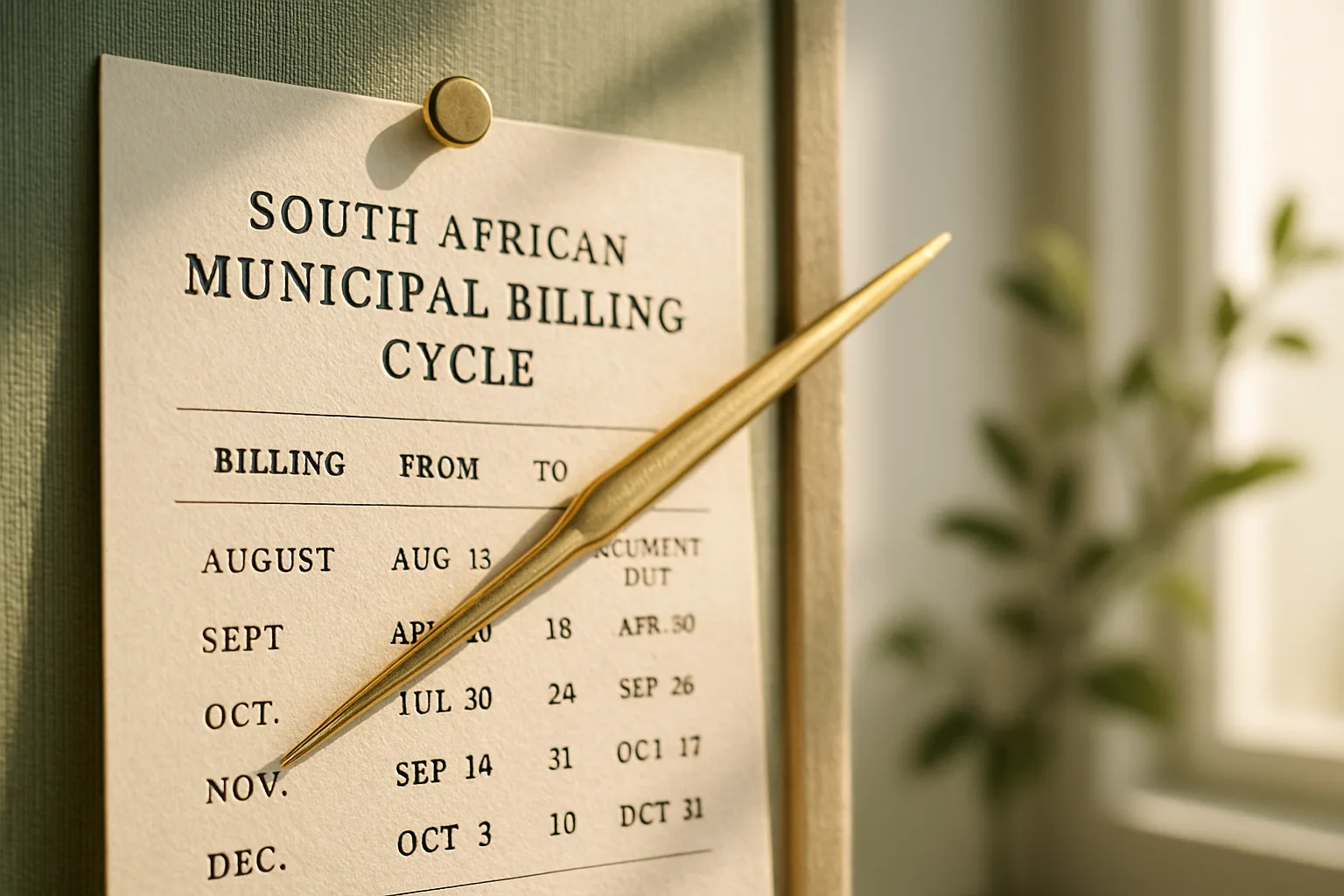
The rates clearance figure the municipality provides isn't always accurate. Municipal accounts can carry old consumption charges, incorrect valuations, or system-generated estimates rather than actual readings. When the clearance figure is inflated and the conveyancer uses it as the basis for the prorata calculation, both the clearance payment and the prorata split will be off.
Conveyancers in the City of Ekurhuleni and the City of Johannesburg routinely request clearance figures early and cross-check them against the seller's most recent statements. Where a discrepancy appears, the conveyancer requests a revised account before lodgement. This step takes time, which is one reason rates clearance is often the longest administrative step in a residential transfer. A conveyancer who applies for the figures in the first week of receiving the file prevents that delay from compounding.
If the municipality overcollects and the overpayment is discovered only after registration, the seller must apply directly to the municipality for a refund. That process runs outside the conveyancer's hands and can take several weeks. A correct figure before transfer avoids a refund application after it.
Which charges are included and which are not
Your rates and taxes line covers the fixed charges on a municipal account. In most South African municipalities, these include:
- Property rates (calculated as a percentage of the property's municipal valuation)
- Refuse removal charges
- Sewerage and sanitation charges
- Any fixed service charges billed per property rather than per unit consumed
Consumption-based charges, water and electricity, are typically not included in the prorata calculation because they are metered and settled at the actual reading date. A municipality billing water on a flat monthly estimate rather than metered readings may include that estimate in the prorata, but the conveyancer will identify which charges are fixed and which are consumption-based from the detailed breakdown on the clearance figures.
Sectional title properties carry a second set of fixed charges: body corporate levies. Levies aren't municipal charges and aren't included in the rates clearance, but they follow the same prorata logic. The body corporate or managing agent issues a levy clearance certificate showing what is owed up to the transfer date, and the conveyancer runs a separate adjustment for levies. If you're buying or selling a flat, a townhouse in a complex, or any property governed by a body corporate, expect two prorata adjustments on the settlement statement: one for municipal rates and one for levies.
What both parties should do before signing off
You don't have to accept the prorata figure as given. Both parties have the right to ask the conveyancer for the underlying numbers before the settlement statement is finalised.
As a seller, request a copy of the rates clearance figures the municipality issued and confirm the annual rates amount matches your most recent municipal statement. If you've been paying monthly direct debits, check whether the clearance figure reflects those payments or treats them as if no payment was made. A municipality that hasn't allocated your payments correctly will overstate the amount outstanding, which means the conveyancer will deduct more from your proceeds than is owed.
As a buyer, ask the conveyancer which charges are included in the prorata figure and which are consumption-based. Confirm the registration date used in the calculation is the date the Deeds Office records, not an estimated date. If the registration is delayed by even a week, the split changes, and the settlement statement should reflect the actual date rather than the date originally planned.
Both of these conversations take five minutes and cost nothing. One gives you a settlement figure you understand; the other is a number you sign because the transfer is happening and time pressure feels like authority.
How the prorata figure fits into a transfer you can verify

A settlement statement can feel like a fait accompli, a document handed to you at the end of a process you weren't fully inside. The prorata rates and taxes line is one of the few figures on that statement you can verify independently, with nothing more than the seller's most recent municipal statement and a calculator.
Property transfers don't follow any calendar the municipality recognises. A sale agreed in January and registered in April crosses two quarters of municipal billing and sometimes a financial year end. A sale agreed in May and delayed by a rates clearance backlog may register in the next municipal year entirely, and the rates figure the conveyancer uses may differ from the one quoted when the offer was signed.
The prorata calculation handles all of this, but it depends on one input being correct: the actual rates and taxes figure from the municipality at the time of clearance. If that figure shifts because a general valuation roll has been updated between offer and registration, the calculation shifts too. The valuation roll is the municipality's assessment of every property in its area for rating purposes. When a new roll is published, rates amounts can increase or decrease, and a transfer caught between the old roll and the new one may carry a rates figure the seller didn't anticipate. Neither the conveyancer nor the buyer can control the valuation roll; both can ask the conveyancer to flag if a new roll appears before registration. The calculation rewards the five minutes it takes to check.
You shouldn't have to sign a settlement statement without understanding every line on it. With Wilma Ewest Attorneys you won't.
Contact Wilma Ewest Attorneys to have your settlement statement explained before you sign, so the figures are clear and the calculation has been verified.
The questions below are the ones buyers and sellers most commonly ask once they see the prorata line on their statement for the first time.
Frequently Asked Questions
What is a prorata rates adjustment on a settlement statement?
A prorata rates adjustment is the portion of the property's municipal rates and fixed service charges the buyer owes to the seller, or the seller owes back to the buyer, based on how many days of the billing period each party owned the property. When a property registers mid-cycle, the billing doesn't split automatically at the municipality. The conveyancer calculates the division using the daily rates figure and the confirmed registration date, then records the result as an adjustment on the settlement statement. If the seller prepaid the full period, the buyer reimburses the seller for the buyer's portion. If the seller underpaid, the shortfall is recovered from the sale proceeds. The figure changes with every transfer because the registration date, the property's annual rates amount, and the number of days remaining in the billing cycle are different each time. Checking the source figures the municipality issued is the fastest way to confirm the adjustment on your statement is correct before you sign.
How do I check if my prorata rates calculation is correct?
Take the annual rates figure from the seller's most recent municipal statement and divide it by 365. That gives you the daily rate. Count the number of days from the registration date to the end of the municipality's billing year, multiply by the daily rate, and compare the result to the figure on your settlement statement. If the municipality uses a 366-day year in a leap year, adjust accordingly. A small rounding difference is normal. A material discrepancy, anything more than R200 to R300, is worth raising with the conveyancer before the statement is finalised. Ask the conveyancer to show you the clearance figures the municipality issued, because those are the source numbers for the calculation. If those figures are wrong at the municipal end, the prorata adjustment will be wrong too, and the correction needs to happen before registration rather than after it. Corrections made after registration require a separate refund application to the municipality, which can take several weeks and runs entirely outside the conveyancer's control.
Are levies included in the prorata rates calculation for a sectional title property?
Levies aren't included in the municipal prorata calculation because they are body corporate charges, not municipal charges. A sectional title transfer carries two separate prorata adjustments: one for municipal rates and fixed services, and one for body corporate levies. The levy adjustment comes from the levy clearance certificate issued by the body corporate or its managing agent, and it follows the same daily-rate logic as the municipal calculation. Both figures appear on the settlement statement, sometimes on separate lines and sometimes combined under a general "adjustments" heading. If you're buying or selling in a sectional title scheme, ask the conveyancer to identify both figures separately so you can verify each one against the source document it came from. A body corporate that has raised a special levy since the offer was signed may also include that amount in the clearance, so confirm whether any special levies are present and whether they fall within the seller's or the buyer's period.