
What Is the Negative Registration System?
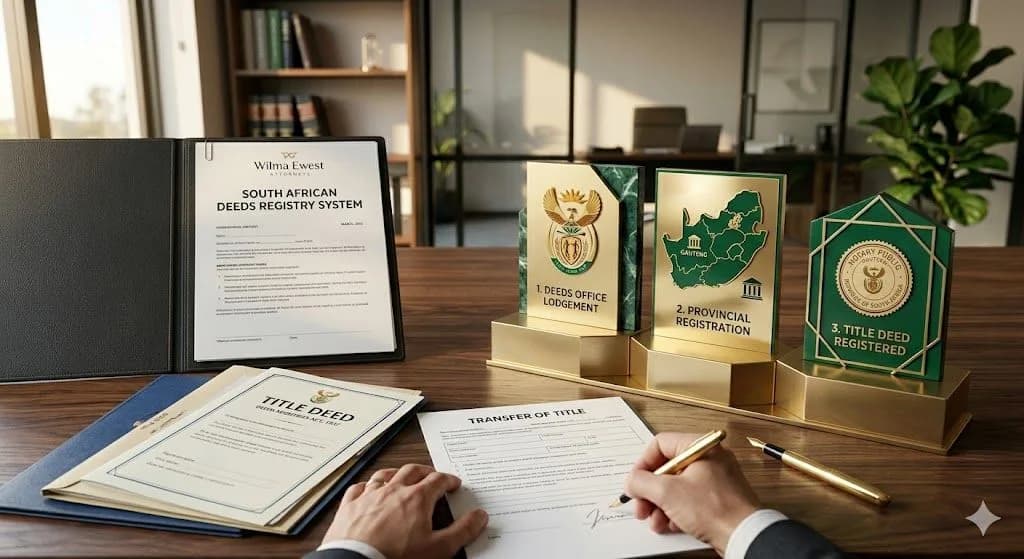
You signed for the house. The transfer registered, the keys changed hands, and a title deed arrived with your name on it. A question sat underneath the relief. Did the State confirm the property was yours to own, or only record what the documents claimed? The deed looked final. So you didn’t ask.
That question deserved a real answer. How a country recorded ownership decided what a title was worth the day someone challenged it. South Africa took one route. Other countries took another. The gap wasn’t academic. It set who carried the loss when a record turned out wrong. And it shaped how every deed got checked before your name went on. Here’s what sat behind your certificate.
What is the negative registration system?
The negative registration system is South Africa’s method of recording property ownership. The Deeds Office registers a deed without the State guaranteeing that the title is correct. The register reflects what was lodged and examined, not a State promise. Accuracy rests on the conveyancer’s certification and the registrar’s examination.
Key Takeaways
- The negative registration system records deeds without a State guarantee of title, so the register reflects what was lodged rather than a promise that it’s correct.
- A conveyancer certifies the facts in every deed, and the registrar examines each deed before it’s registered.
- South Africa runs a deeds-registration model, which differs from the title-registration (Torrens) systems used in Australia and parts of Canada.
- If the register contains an error, the law provides for rectification rather than automatic State compensation.
- In practice the system is dependable, because examination and professional certification catch most errors before registration.
What the negative registration system means for your title

The negative registration system means the State records your ownership without standing behind it. The Deeds Office registers the deed you lodge; it doesn’t certify that the facts inside that deed are true. What sits in the register reflects what was examined and accepted. It isn’t a government promise that the property is yours beyond dispute. That distinction sounds technical until the day a competing claim appears.
The register tells anyone who searches it what the documents on file say. South Africa’s Deeds Office puts it plainly. Under a negative system, the data updates only when a deed is lodged for an act of registration. The conveyancer who prepares the deed carries responsibility for the correctness of the facts, as the Deeds Office registration FAQ sets out. The register is dependable because the inputs are checked, not because the State insures the outcome.
So your title deed is strong evidence of ownership, but it isn’t an unbreakable guarantee. If the underlying facts were wrong when the deed registered, the error can follow the property. That’s the reason the rest of the system exists at all. The model explained in more depth sits in South Africa’s negative registration model, and it’s worth reading once the basics make sense.
Why the register stays dependable
A negative system would collapse if nobody checked the deeds, so South African law builds two safeguards into every registration. The first is the conveyancer’s certificate. Before a deed is lodged, a qualified conveyancer confirms the facts: the parties, their status, the property description. The second is the registrar’s examination. Section 3 of the Deeds Registries Act 47 of 1937 is direct. The registrar must examine every deed submitted, and reject any the law doesn’t permit.
These two filters do the work the State refuses to underwrite. The conveyancer is liable for the accuracy of what’s certified. The registrar’s examiners read each deed against the Act and the existing register before anything is recorded. Deeds with errors are sent back rather than registered.
The result is a register that earns trust through process, not through a guarantee. For you, the reliability of your title rests on two professionals doing their work correctly. One is the conveyancer who prepared the deed. The other is the examiner who passed it. When either step is rushed, the risk doesn’t disappear. It moves into your title and waits. The deeper account of those checks sits in how the Deeds Registries Act is structured and in the examination the registrar performs.
How it differs from a title-guarantee system
South Africa registers deeds, while several other countries register title. The difference decides who absorbs a mistake. Under a title-registration model, the State maintains the register and guarantees the title it records. That model, often called the Torrens system, is used in Australia and parts of Canada. If the State gets it wrong, it generally compensates the person who loses out. This comparison of the Torrens and South African systems sets out the contrast.
South Africa took the other path. Each transfer here produces a fresh deed of transfer rather than an endorsement on the old one. The State records that deed without guaranteeing it. The register is a careful account of registered transactions, not an insurance policy. That’s the reason the examination and certification steps carry so much weight. They’re the substitute for a State guarantee this country never adopted.
For a buyer, the practical effect is subtle but real. A title-guarantee system shifts the cost of an error onto the State. A deeds-registration system leaves more of that responsibility with the parties and their professionals. Neither model is careless. They place the safety net in different hands. Knowing which model governs your purchase tells you where to look when something goes wrong. It also tells you who you’ll be dealing with if it does.
Who carries the risk when the record is wrong

When the register contains a mistake, the law offers a correction, not a cheque. Because the State doesn’t guarantee title, an error in a registered deed isn’t automatically the government’s bill to pay. Instead, the Deeds Registries Act and the courts provide routes to rectify the register. Those routes include rectification applications, court orders, and specific procedures for correcting deeds.
This is where the negative registration system carries real consequences. If a boundary was misdescribed, a name captured wrongly, or a right omitted, the person affected has to act to put it right. The remedy exists, but it takes time, legal work, and sometimes the cooperation of another party who benefited from the error. Some corrections also need the consent of every affected party. The register won’t fix itself. The State won’t step in to compensate by default.
For you, the lesson is practical. Due diligence before registration is worth far more than a remedy after it. Checking the deed, the diagram, and the conditions of title while the transfer is still in motion costs little. Correcting a registered error later costs far more. The distinction between real rights and personal rights often decides how hard that correction turns out to be.
What the system asks of your conveyancer
Because the State steps back, the negative registration system puts the weight of accuracy on your conveyancer. The conveyancer doesn’t merely fill in forms. He or she certifies, under professional and personal responsibility, that the facts in the deed are correct before it reaches the registrar. Under the Deeds Registries Act, a deed must be prepared by a conveyancer. That conveyancer carries responsibility for the correctness of the facts, from full names to identity numbers to status.
That certification is the load-bearing element of the whole structure. If a conveyancer certifies a detail that turns out wrong, the consequences attach to that certification. The examiner’s review is the second check, not the first line of defence. A negative system rewards careful preparation and penalises the rushed kind.
It also explains why the choice of conveyancer is a substantive decision, not an administrative one. The professional who prepares your deed is the person standing where the State chose not to. The broader role of that professional sits in the legal function of conveyancing and in what a conveyancer is. When the register depends on certification rather than a guarantee, the quality of that certification becomes the quality of your title. That’s the trade the model makes.
What your title deed records and what it doesn’t

Your title deed isn’t a State guarantee. It’s the record of a transaction that a conveyancer certified and a registrar examined. That record entered a register the country has trusted for generations. It’s a different kind of assurance, earned through process rather than promised by decree. It asks one thing of you in return. The work behind your deed must be done properly, by people who treat every entry as something to get right before it goes in.
You shouldn’t have to wonder whether the register behind your title is sound. With Wilma Ewest Attorneys you won’t.
Contact Wilma Ewest Attorneys to begin with a file review that confirms exactly what your deed records and what it doesn’t.
A few questions tend to follow once the model makes sense. Here are the ones that come up most when buyers ask what their deed proves.
Frequently Asked Questions
Is the negative registration system the same as having no title guarantee?The negative registration system records property ownership without a State guarantee of title, which isn’t the same as having no protection. Under this model, the Deeds Office registers a deed once a conveyancer has certified its facts and a registrar has examined it. The title deed remains strong proof of ownership. Banks, courts, and buyers accept it. What it lacks is a State promise to compensate automatically if the record turns out wrong. Protection comes from the checks built into registration rather than from an insurance-style guarantee. In practice, a registered South African title is dependable. Disputes over registered ownership are uncommon. The absence of a guarantee changes who carries the cost of a rare error, not whether ownership is recognised. Due diligence before registration still pays off, because correcting a registered error later is slower than preventing it.Does the negative registration system make South African property risky to buy?South African property isn’t risky to buy simply because the country uses a negative registration system. The model relies on professional certification and registrar examination. Faulty deeds are rejected rather than registered, so the resulting register is dependable. Banks lend against these titles every day, which reflects the confidence the financial system places in the record. The real risk lies in skipped checks, not in the model itself. A buyer who has a conveyancer examine the title, the diagram, and the conditions of title before registration is well protected. Problems tend to arise when a transaction is rushed, or a detail is assumed rather than verified. The negative registration system rewards thorough preparation, and a careful transfer faces little exposure. Risk is a function of diligence, not of the registration model.How does the negative registration system handle an error in a title deed?Under the negative registration system, an error in a registered title deed is corrected through a legal remedy, not an automatic State payout. The Deeds Registries Act and the courts provide for rectification of the register. The route depends on the nature of the mistake, and can include rectification applications or court orders. Because the State doesn’t guarantee title, the party affected by the error usually has to initiate the correction. This can involve legal costs, time, and at times the cooperation of another party who benefited from the error. The remedy is real, and the register can be put right. The process is more involved than a simple administrative update. This is why verifying the deed, the property description, and the conditions of title before registration carries real weight. Prevention is consistently cheaper and faster than correction after the fact.Who is responsible for accuracy under the negative registration system?Two parties carry responsibility for accuracy under the negative registration system: the conveyancer and the registrar. The conveyancer who prepares a deed certifies that its facts are correct, including the parties’ details, status, and the property description. That conveyancer is accountable for the certification. The registrar of deeds then examines every deed lodged, and rejects any that the law doesn’t permit or that contains a defect. Together these two checks replace the State guarantee this model deliberately omits. The system therefore depends on the competence of the conveyancer who prepares the deed and the examiner who reviews it. For a property owner, this is the reason the choice of conveyancer is a meaningful decision rather than a formality. The reliability of the title rests on the quality of that professional work.