
Transfers from Insolvent Estates

A family sits at a kitchen table. They hold an accepted offer on a home. The price seems like a gift. The deposit is paid. Weeks pass in silence. Then, the realization sets in. The seller is bankrupt. The property belongs to a crumbling financial estate. The dream stalls. Legal notices arrive. The buyer is trapped in a web of debt that is not theirs. This is the human cost of a transaction built on quicksand. Security vanishes.
The paperwork piles up. Phone calls go unanswered. Financial collapse leaves a long shadow. You need a steady hand to navigate this terrain. It requires someone who understands that a home is more than brick and mortar. It is your peace of mind. Let us look at the facts.
What is an Insolvent Estates Transfer?
An insolvent estate transfer is the formal conveyancing process where immovable property owned by a bankrupt individual or juristic entity is sold and transferred to a purchaser under the statutory administration of an appointed trustee or liquidator.
Key Takeaways
- Trustee control: The insolvent individual loses all legal capacity to dispose of the immovable property.
- Master’s oversight: Every transaction requires formal consent or an endorsement from the Master of the High Court.
- Debt eradication: All pre-existing mortgage bonds are cancelled during the registration process in the Deeds Office.
- Clearance delays: Securing municipal rates clearances and SARS approvals takes significantly longer than standard transactions.
- Purchaser protection: The buyer receives clean title, entirely free from the historical claims of the insolvent person’s creditors.
The Master Divestment: Master of the High Court Oversight
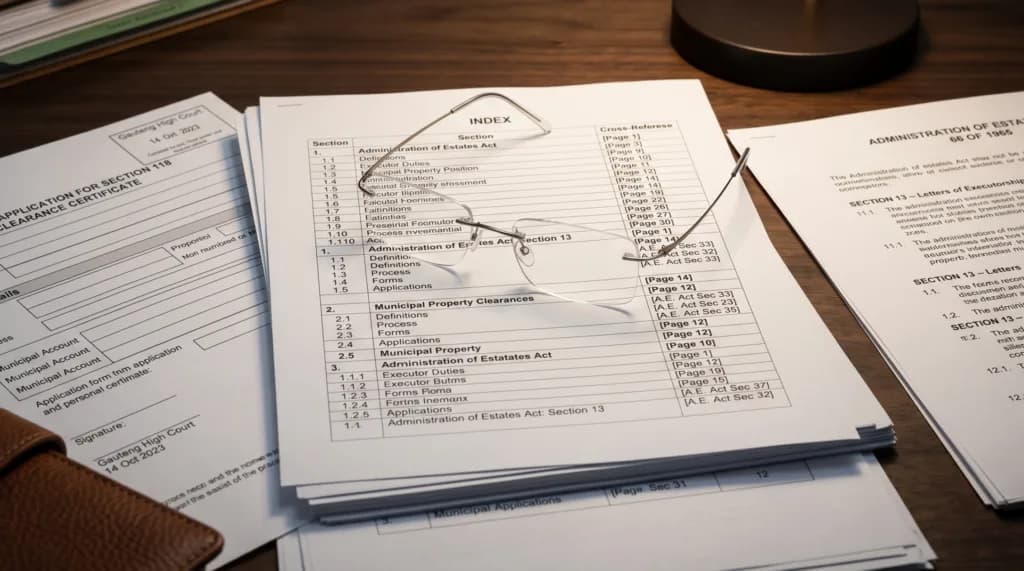
The law moves quickly when insolvency strikes. Upon sequestration, the owner is immediately divested of their property. Control shifts to the Master of the High Court. This transition is governed strictly by the Insolvency Act 24 of 1936, Section 20. A trustee takes over the asset portfolio. You cannot negotiate with the original homeowner anymore. Their signature on a contract is legally worthless. The trustee is the only entity empowered to sell the land.
Managing insolvency litigation risks is part of this journey. Creditors sometimes dispute the sale price. They might argue the asset was undervalued. We review every resolution with absolute precision. We ensure the trustee has complied with every directive. This vigilance protects your deposit. It keeps the transaction moving forward safely. It prevents a sudden court interdict from freezing your transfer.
Financial Discharge: Managing SARS and Rates Clearance Obstacles
Money drives the insolvency process. Every cent must be accounted for. The local municipality is always the first party standing in line. They demand their share before any ownership changes hand. This mandate is reinforced by the Local Government: Municipal Systems Act 32 of 2000, Section 118. The city will not issue a clearance certificate until historical debts are addressed. The trustee must raise these funds from the estate pool.
This financial hurdle often slows things down. The historical debt might exceed the value of the property itself. The trustee must negotiate. They handle the estate debt distribution according to statutory preferences. Securing a Section 118(1) certificate is non-negotiable. This certificate covers the two years preceding the date of application. It is a critical safety net for the buyer. Without it, the Registrar of Deeds will reject the lodgement immediately.
The South African Revenue Service adds another layer of scrutiny. Transfer duty must be addressed under the Transfer Duty Act 40 of 1949. SARS audits these transactions very closely. They check if the insolvent person was a VAT vendor. If VAT applies, the transfer duty is exempt, but the paperwork multiplies. We track these tax clearances daily. We make sure the files do not gather dust on a bureaucrat’s desk.
The Buyer’s Protection: Securing Title Against Creditor Claims
Fear is common when buying a distressed asset. Buyers worry that old creditors will knock on their door. They fear a bank might repossess their new kitchen. These fears are natural but legally unfounded. The entire purpose of a forced sales processing system is to clean the slate. The buyer is insulated from the past.
The transfer process strips away the old financial burdens. When the property registers in your name, all existing mortgage bonds are cancelled simultaneously. The old banks lose their grip on the physical dirt. Their claims are converted into monetary claims against the insolvent estate residue. You walk away with an unencumbered asset. The title deed is pristine.
This protection is absolute. It is guaranteed by the state. The creditors cannot touch the property once registration occurs. Their legal battle is with the trustee, not with you. We verify that every bondholder has been properly notified. We confirm that the cancellation figures match the deeds registry requirements. Your security is our only priority.
Conveyancing Mechanics: The Specialised Document Audit
The Deeds Office is an unforgiving environment. A single typo can derail a file for months. In an estate liquidation, the paperwork is highly specialized. The standard power of attorney to pass transfer is modified. It must reflect the trustee’s capacity. It must reference the specific sequestration order. This precision is required under the Deeds Registries Act 47 of 1937.
The vesting of insolvent assets must be explicitly stated in the deeds. The examiner will look for the Master’s endorsement. This endorsement is granted under the Administration of Estates Act 66 of 1965 when applicable. The file must contain proof that the creditors approved the sale conditions. If these proofs are missing, the file is rejected. The process starts over.
We conduct a forensic pre-audit on every document. We do not wait for the Deeds Office to find a flaw. We check the identity numbers of the trustees. We verify the letters of appointment. We ensure the local authority clearance is valid for at least sixty days from lodgement. This rigorous approach reduces stress. It turns a chaotic situation into a predictable timeline.
Whether a creditor can reach the home depends on how couples hold property, since the form of ownership decides what falls into the estate.
Closing Reflection
Navigating a distressed property purchase requires patience. It demands an appreciation for technical detail. The system is complex, but it is also highly secure when handled correctly. The law provides a clear path through the wreckage of bankruptcy. You can step into these transactions with confidence. You just need the right map. We provide that map. We stand between you and the legal chaos. We ensure your new beginning is built on solid ground.
You shouldn’t have to navigate the complex legal minefield of insolvent estate transfers alone. With Wilma Ewest you won’t.
Contact Wilma Ewest Inc today to secure your property transaction.
The legal technicalities of insolvent estates often generate urgent practical questions for property buyers and investors.
Frequently Asked Questions
How long do property transfers from Insolvent Estates take to register?Registration typically requires four to six months to complete. This extended timeline is caused by several mandatory statutory procedures that do not exist in standard property transactions. The appointed trustee must first secure formal resolutions from the creditors during scheduled statutory meetings. Following creditor approval, the conveyancer must submit a formal application to the Master of the High Court to obtain the necessary Section 42(2) endorsement. Municipal rates clearances also face significant administrative blockages, as local authorities must audit historical debts to calculate the split between old estate debt and current charges. We monitor these milestones weekly to mitigate property liquidation delays at every stage.Who pays for the outstanding municipal debt in Insolvent Estates?The appointed trustee settles the historical municipal debt from the available funds within the insolvent estate pool. Under South African law, a property cannot be transferred without a valid Section 118(1) rates clearance certificate from the local municipality. This specific certificate covers all municipal debts incurred during the two years immediately preceding the date of the clearance application. The trustee must pay this specific amount to facilitate the forced sales processing system. Any historical municipal debt older than two years remains a concurrent claim against the residue of the estate. The purchaser is not liable for these historical debts and receives the asset free from municipal encumbrances.Can a sale of property from an Insolvent Estates transaction be cancelled by creditors?Creditors cannot directly cancel a validly concluded sale of property if the trustee acted within their legal powers. The trustee represents the collective body of creditors and derives their authority from the Insolvency Act. If the trustee obtained the required creditor resolutions and secured the Master’s formal consent, the contractual agreement is legally binding on the estate. Creditors cannot intervene simply because they subsequently receive a higher offer from an outside party. However, if a trustee enters into a sale without the necessary statutory credentials or skips the mandatory Master’s authorization, aggrieved creditors can challenge the validity of the transaction in the High Court before registration occurs.Is transfer duty payable on properties bought from Insolvent Estates?Transfer duty remains payable by the purchaser based on the standard South African Revenue Service sliding scales. The bankruptcy of the seller does not automatically exempt a property transaction from fiscal duties. The conveyancer must submit a formal transfer duty application to SARS via the eFiling platform to secure a receipt. The only exception to this rule occurs if the insolvent entity was a registered VAT vendor and the property formed part of their enterprise. In those specific circumstances, the transaction attracts Value-Added Tax rather than transfer duty. The purchase price is then typically deemed to be inclusive of VAT, and the trustee handles the tax accounting within the estate debt distribution frameworks.
This article is part of Types of Transfers.